Why Is My Garden Sinking? Subsidence in Amsterdam Explained
Published · Hoogwaardige Bestrating
You step out of the back door and the first slab sits a little lower than it did last year. Puddles hang around longer after rain, and the garden gate has stopped closing. Chances are your house isn’t moving, but your garden is. Much of Amsterdam sits on peat and clay that was raised with sand at some point, and that ground keeps settling. In 2022 Deltares, the Dutch research institute for water and subsurface, assessed five pilot areas for the City of Amsterdam. Rates ranged from about 1.2 millimetres a year in Tuindorp Oostzaan Oost to 1.7 to 6.3 millimetres a year around the Krulslaplantsoen in Bijlmer-Oost. That sounds like nothing, but at the top of that range it adds up to more than 12 centimetres over twenty years. Meanwhile KNMI, the Dutch met office, records an average of 850 millimetres of rain a year at Schiphol, and all that water has to go somewhere. Here’s why gardens sink, what your neighbours have to do with it, and what you can do.
Your house is on piles, your garden isn’t
The mechanism is simpler than you’d think. Homes on pile foundations, timber or concrete, don’t sink. Everything without piles does: the garden, the street, and the cables and pipes that lie loose in the soil. Deltares puts it in exactly those terms in its quick scan.
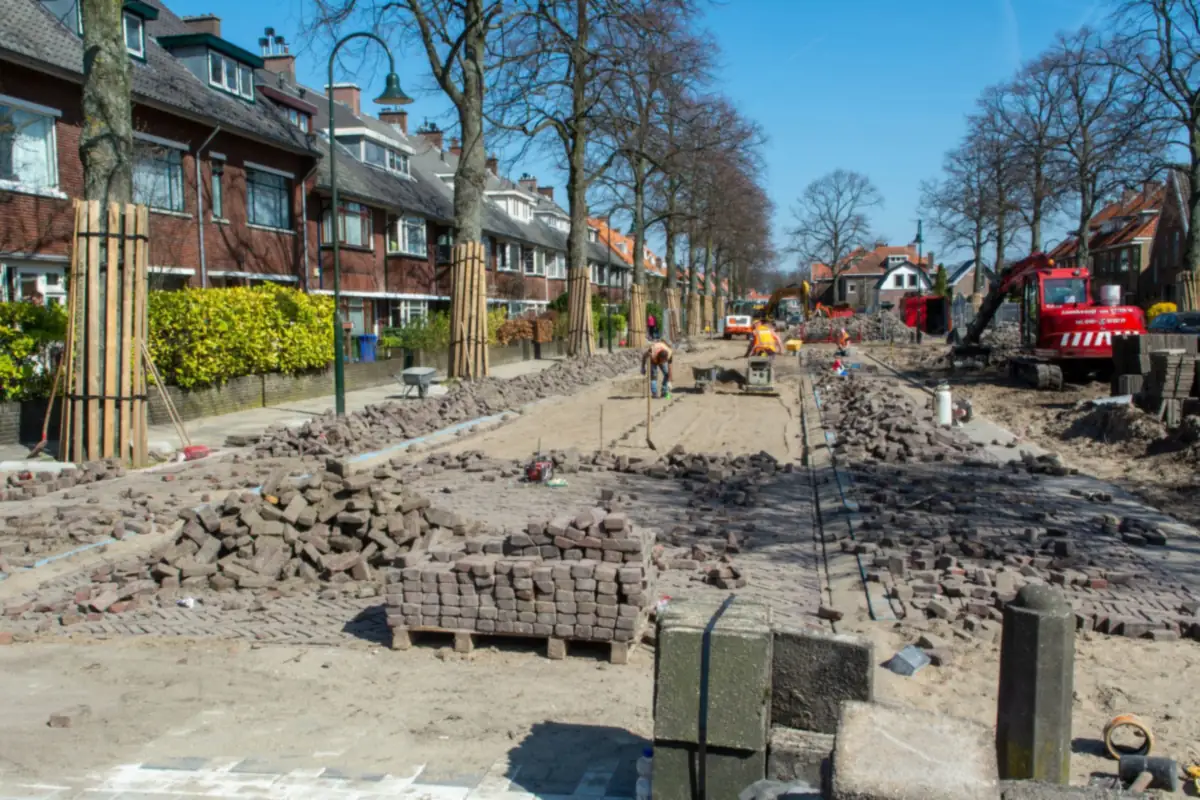
The result is a house that stays at the same height while the ground around it slowly drops. Deltares has no foundation records for Zuidoost, but given how young the buildings are, it assumes they stand on concrete piles. So the house holds its level and the garden falls away around it. Tuindorp Oostzaan is the exception: the houses there are founded “op staal”, on shallow foundations without piles, and sink along with the ground.
Paving that has gone wonky can be lifted, built up and relaid. Our page on relevelling sunken paving in Amsterdam explains how we do it. But it helps to understand why it happens first, because that decides what’s worth doing.
What Deltares measured: subsidence in five Amsterdam neighbourhoods
The Deltares quick scan of subsidence in Amsterdam (February 2022) looked at five pilot areas. Estimated sinking per year:
- Tuindorp Oostzaan Oost (Noord): about 1.2 millimetres
- Terrasdorp (Noord): 1.1 to 2.3 millimetres
- Transvaalbuurt (Oost): 2.5 to 3.5 millimetres
- Helmersbuurt (West): 1.2 to 2.3 millimetres
- Krulslaplantsoen and Nieuw Kralenbeek (Bijlmer-Oost, Zuidoost): 1.7 to 6.3 millimetres
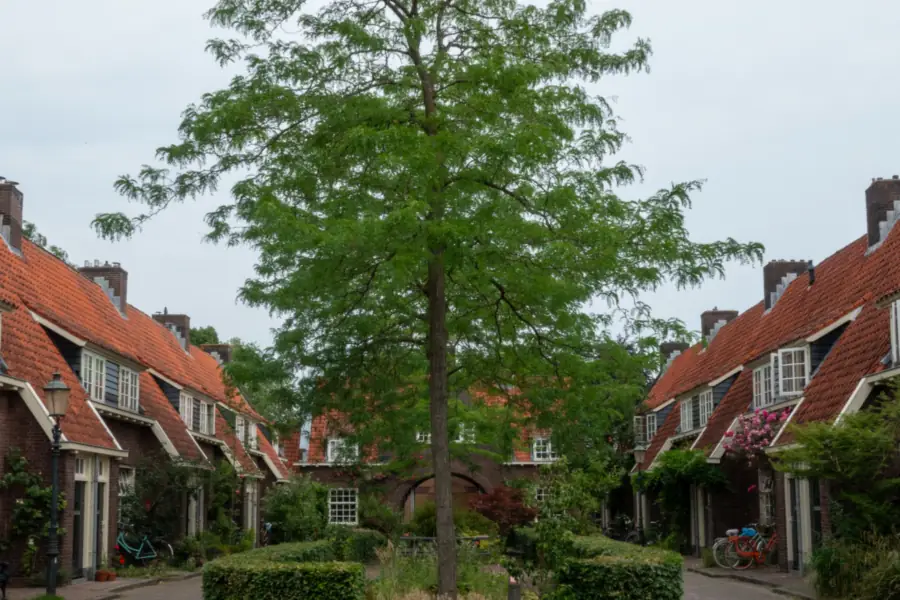
The spread has reasons behind it. Terrasdorp was raised with roughly 1.5 to 2 metres of sand. In the Transvaalbuurt there’s 4 to 5.5 metres of sand on peat sandwiched between two thin clay layers, and the drainage depth is only about 80 centimetres. The Krulslaplantsoen, close to us in Zuidoost, was raised in the 1960s. That’s fairly recent, so the newer parts in particular are still sinking hard. The terraced houses there date from 2006. Deltares also reports seepage water (kwel) welling up at 2.5 to 5 millimetres a day, which causes a lot of flooding in public space, and high groundwater that damages plants in gardens and parks.
In Tuindorp Oostzaan Oost, ground level sits around 2.30 to 2.45 metres below NAP, the Dutch reference level, with the polder water kept at 3.45 metres below NAP. The neighbourhood was built in 1919 to 1921 as about a thousand timber-frame houses on concrete slabs, meant to last 35 years. They’re still there.
Raise yours, and next door gets the water
This is where it becomes a neighbourhood matter. The municipality raises public space regularly, sometimes to keep the street level with front door thresholds. But a private garden belongs to its owner, and Deltares observes that homeowners don’t always raise their back gardens. The street ends up higher than the garden, and water runs the wrong way: into the back garden, and sometimes into the house.
It gets trickier when one household raises and the neighbours don’t. The water simply shifts to the lower gardens next door. According to Deltares, many back gardens are never raised because there’s no simple or affordable way to bring soil in every so often, and those are exactly the gardens with serious waterlogging. Picture a row of small gardens with only a back alley for access: every load goes in by wheelbarrow down a narrow path.
So talk to your neighbours before you do anything. Raising together, or at least agreeing where the water goes, saves arguments over the fence.
House connections: the part you can’t see
Under your garden and the pavement run the pipes from your house to the main sewer and the water main in the street. The house stays put, the ground drops, so those pipes are slowly put under strain. Deltares warns that house connections can crack or break once the settlement difference gets too large. Around the Krulslaplantsoen, the report lists damage to connections as one of the consequences.
Purmerend shows what that looks like. In Weidevenne, a Vinex estate (a 1990s national growth-area development) built in 1996 and 1997, holes open up in gardens after heavy downpours; on the Amazonelaan, paving slabs sank out of sight. The municipality explained that the ground was preloaded with sand in 1996, and that the sand washes away through broken or sagging sewer pipes.
If one patch of your garden keeps sinking, especially along the line of the sewer, have the connection checked before anyone paves over it. Otherwise you’re just paving over the problem.
Raise the garden or make it rain-ready?
Raising is the familiar route: slabs up, sand in, slabs back down at the right height. Price guides give an indicative 20 to 30 euros per m² for relaying sunken paving (Trustoo, VAT not stated), plus 50 to 70 euros per cubic metre of fill sand (Homedeal, VAT included). Labour carries 21 percent VAT. What it costs you depends heavily on how much sand is needed and how it gets into the garden. We only know that once we’ve measured up.
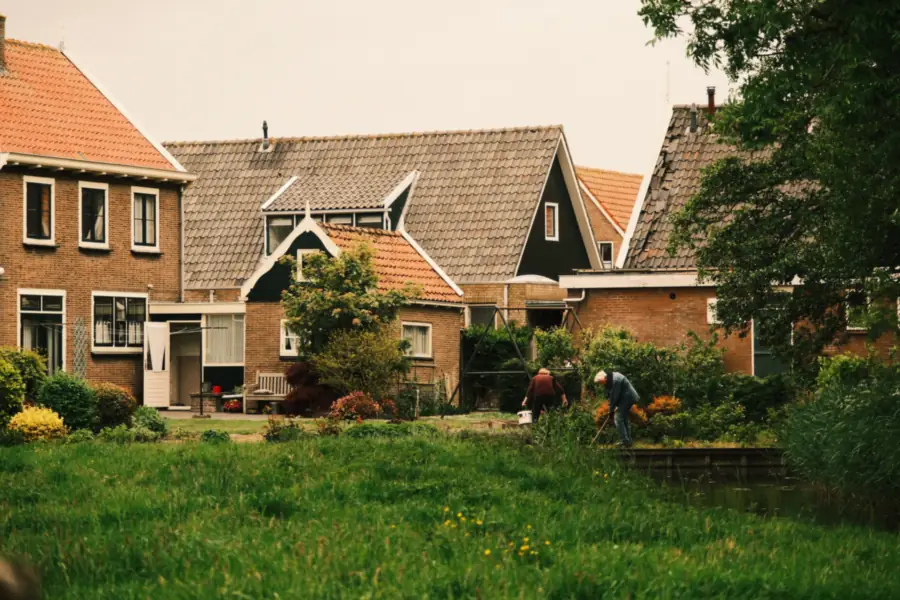
But raising isn’t always the smart choice. Amsterdam Weerproof, the city programme formerly called Rainproof, describes a garden in the Mercatorbuurt that sat about 50 centimetres below street level, with groundwater around 20 centimetres below the surface. Raising it would have meant ripping out all the planting and hiring a crane to lift the sand over the roof. The owner went another way, as the Weerproof case study of a rain-resistant back garden shows: a garden built to hold rain rather than shed it.
If you go for more green and less stone, the city will chip in. Through the City of Amsterdam’s Subsidie Groen you can get up to 15 euros per m² for removing paving, up to 1,000 euros per house with its own ground. You have to take up at least 10 m² and keep it green for five years; a pond counts too. You can apply jointly with neighbours. The catch: you apply and get approval before you start, and you finish within a year. The city wants a quote that splits labour and materials and shows the VAT rates. We write ours in that format. The old tiles can go to the free Tegelservice run by Weerproof and the city, which collects between April and October.
Often the answer is a mix: a raised terrace by the back door, and further down a lower planted area that’s allowed to hold water.
What’s under your garden: silt, lead and sand
How fast your garden sinks depends on what lies deep below it. On Zeeburgereiland, the municipality found that the ground in the Sluisbuurt would sink 50 to 80 centimetres in thirty years instead of the expected 20 centimetres. The culprit was dredged silt in the deeper layers. The city responded with surcharge mounds about 1.5 metres high, drainage and lightweight sand.
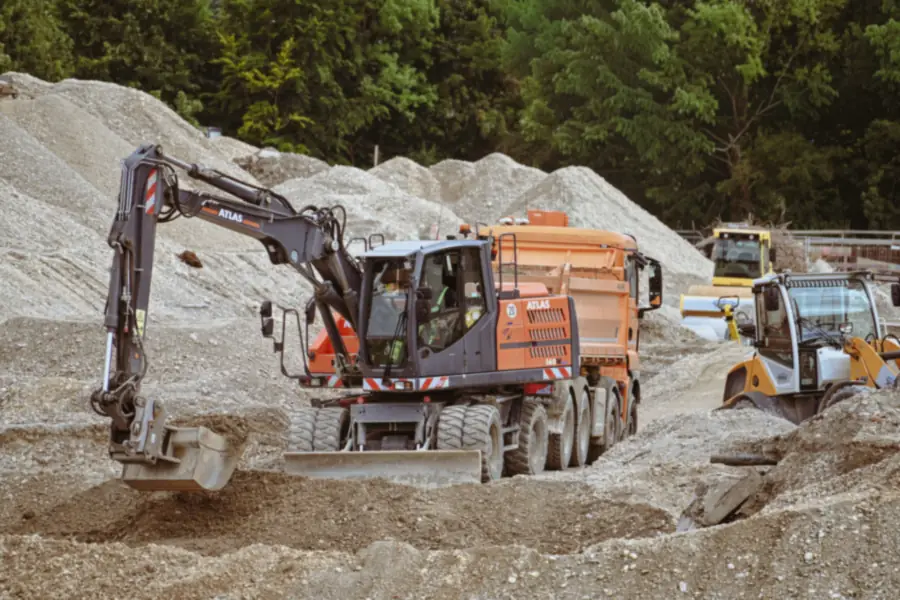
A large share of Amsterdam was raised with sand at some point, and that sand had to come from somewhere. The Gaasperplas lake was dug to win sand for building Zuidoost, the Sloterplas for the Westelijke Tuinsteden, the post-war garden suburbs in the west. IJburg was built up with around 25 million cubic metres of sprayed sand. How thick that layer is under your house, and what’s beneath it, changes from street to street.
If you’re digging in an older city garden, there’s one more thing to think about: lead in the soil. The City of Amsterdam offers a loodcheck, a lead test for gardens. Get it done before you start moving or raising soil.
Subsidence around Amsterdam: Almere and Purmerend
Subsidence doesn’t stop at the city limits. In the Regenboogbuurt in Almere Buiten, built in the 1990s on an old bed of the river Eem, some streets sank more than half a metre in 25 years. Front doors ended up above street level, and the municipality had to raise and repave early. Almere lies 2 to 5 metres below sea level.
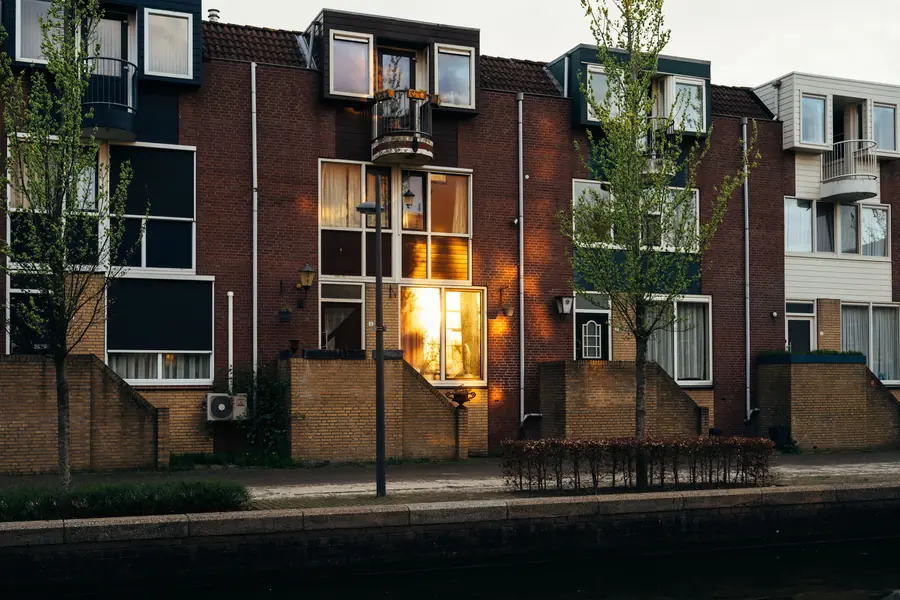
In Purmerend there’s the Weidevenne sinkhole story described above. Same pattern, different cause.
Whichever way you go, raising or greening, plan it alongside anything else happening around the house. If a driveway or new exit to the street is on the cards too, read what’s involved in building a driveway in Amsterdam first, because a raised front garden and a new entrance are closely linked.
We’ll come and look free of charge, measure the level differences and put in writing how much sand is needed and what the build-up looks like. Request a quote for your sunken garden
Frequently asked questions
Why is my garden sinking when my house isn't?
Many Amsterdam homes stand on timber or concrete piles, so they don't sink. Gardens, streets and unpiled cables and pipes do go down with the ground. Deltares described this in the subsidence quick scan it produced for the City of Amsterdam in 2022.
How fast is the ground sinking in Amsterdam?
It varies by neighbourhood. In 2022 Deltares estimated about 1.2 millimetres a year in Tuindorp Oostzaan Oost, 1.1 to 2.3 in Terrasdorp, 2.5 to 3.5 in the Transvaalbuurt, 1.2 to 2.3 in the Helmersbuurt and 1.7 to 6.3 millimetres a year around the Krulslaplantsoen in Bijlmer-Oost.
Will the municipality raise my garden?
No. The municipality raises public space regularly, but a private garden is the owner's responsibility. Deltares notes that many back gardens are never raised as a result, which leads to waterlogging.
Is there a grant for replacing tiles with planting?
In Amsterdam, yes, through the Subsidie Groen: up to 15 euros per square metre and up to 1,000 euros per house with its own ground, for at least 10 square metres of paving removed and kept green for at least five years. You must apply and be approved before work starts.